
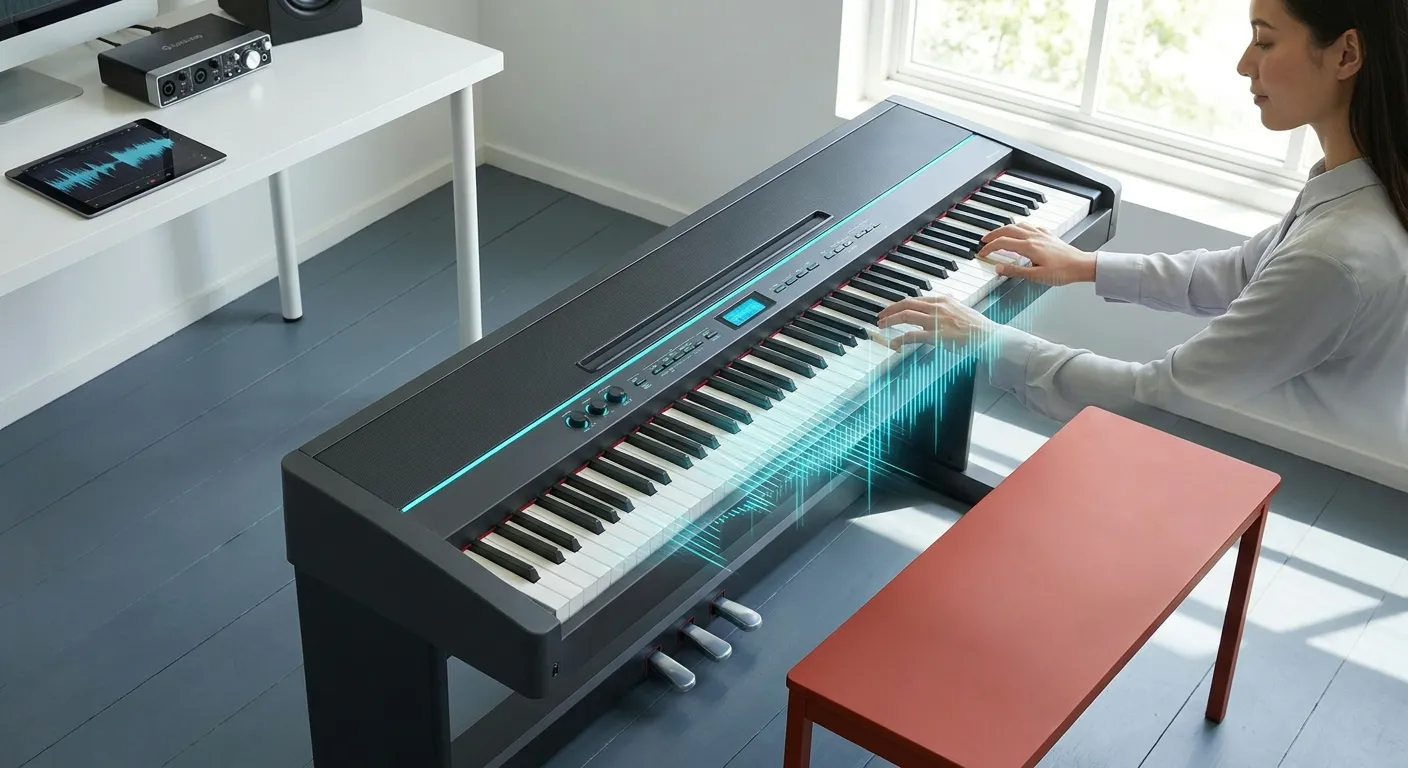
For aspiring and experienced pianists, understanding digital piano sound modeling is key to selecting an instrument that truly resonates. In a market where digital pianos now dominate, capturing 61.2% of the global piano market share in 2025, manufacturers are pushing the boundaries of realism. The quest for an authentic acoustic piano experience in a digital format has led to remarkable innovations in how these instruments produce sound. No longer just simple recordings, modern digital pianos employ sophisticated technologies to replicate the complex nuances of a grand piano.
Beyond Samples: The Evolution of Digital Piano Sound Engines
Historically, digital pianos relied heavily on sample playback – essentially, recordings of acoustic pianos. While effective, these static recordings could sometimes lack the dynamic responsiveness and organic resonance of a real instrument. The industry’s rapid growth, projected at a 5.8% CAGR from 2026, is driven by continuous improvements, with advanced sound modeling at the forefront.
Today, manufacturers are intensely focused on replicating the acoustic piano experience through real-time modeling technologies. This isn’t just about playing back a sound; it’s about recreating the physics of how a piano produces sound. Imagine the intricate vibrations of strings, the sympathetic resonance of undamped strings, the subtle thud of a hammer, and the way sound reverberates within the piano’s body – all dynamically generated as you play.
Decoding Advanced Sound Modeling Technologies
Two prominent examples of this technological leap are Virtual Resonance Modeling (VRM) and SuperNATURAL technology:
Virtual Resonance Modeling (VRM)
Yamaha’s Virtual Resonance Modeling (VRM) is a prime example of how digital pianos are becoming more expressive. Instead of just playing a recorded note, VRM simulates the complex sympathetic vibrations of the entire acoustic piano. This includes the resonance of the strings themselves, the soundboard, and even the aliquot strings. When you press the damper pedal, VRM calculates and reproduces the rich, complex overtones that occur in an acoustic grand piano. This means every nuance, from the subtle decay of a note to the interaction between pressed and unpressed keys, is dynamically rendered. Yamaha often pairs this with samples from their CFX and Bösendorfer Imperial grand pianos, creating an incredibly rich and detailed soundscape.
Roland’s SuperNATURAL and Piano Reality Engines
Roland takes a similar, yet distinct, approach with its proprietary “Piano Reality engine” and SuperNATURAL technology. SuperNATURAL sound engines don’t just use samples; they combine advanced sampling with modeling technology. This allows for seamless tonal changes based on how hard you strike the keys, eliminating the stepped or artificial transitions sometimes heard in older sample-based instruments. Furthermore, Roland’s newer Piano Reality engines, found in their premium models, elevate this realism even further. They meticulously model the entire sound production process, from the hammer striking the string to the sound radiating through the cabinet. Consequently, players experience a truly organic and expressive response, mirroring an acoustic grand piano.
Why Realistic Digital Piano Sound Modeling Matters
The pursuit of authentic sound in digital pianos isn’t merely a technical exercise. Instead, it profoundly impacts the player’s experience. A digital piano with superior sound generation provides a more immersive and inspiring practice environment. For instance, the subtle nuances of an acoustic instrument, like the way notes decay or resonate with each other, are crucial for developing proper technique and musicality. Moreover, when the sound feels natural, players can focus more on their performance and less on the limitations of their instrument.
Many beginners start with digital pianos because of their affordability and versatility. Therefore, having a realistic sound engine from the outset can significantly aid their progress. It helps them develop an ear for the authentic piano tone, which is vital whether they eventually transition to an acoustic instrument or continue with digital options. Understanding these sound technologies also helps in navigating digital piano choices effectively, ensuring you get the best value for your investment.
The Components of Authentic Acoustic Piano Sound
To fully appreciate advanced digital piano sound generation, it helps to understand what makes an acoustic piano sound so complex. Primarily, several elements contribute to its unique character:
- Direct Sound: This is the initial sound produced when a hammer strikes a string.
- Sympathetic Resonance: Undamped strings vibrate in sympathy with played notes, adding richness and sustain.
- Damper Resonance: When the damper pedal is pressed, all dampers lift, allowing all strings to resonate freely. This creates a lush, interconnected sound.
- Cabinet Resonance: The wooden body of the piano acts as a soundboard, amplifying and shaping the sound.
- Key-Off Samples/Effects: The subtle sound of the damper returning to the string or the key being released.
- Hammer Noise: The slight mechanical sound of the hammer striking the string, adding to the realism.
Advanced digital piano sound modeling aims to replicate each of these elements dynamically. This means the instrument doesn’t just play a pre-recorded sound, but rather generates these nuances in real-time, responding to every subtlety of your playing.
Exploring Other Sound Modeling Innovations
While Yamaha and Roland are prominent, other manufacturers also contribute significantly to the field of advanced sound generation. For example, Kawai’s Harmonic Imaging XL (HI-XL) technology, often paired with their Shigeru Kawai EX concert grand piano samples, uses sophisticated algorithms to reproduce the broad dynamic range and harmonic richness of their acoustic counterparts. Similarly, Casio’s Multi-dimensional Morphing AiR Sound Source focuses on seamless transitions between different velocity layers and extended natural decay, aiming for a highly expressive and nuanced sound.
These diverse approaches highlight a shared goal: to move beyond static samples and create an interactive, living sound experience. Ultimately, each brand strives to capture the essence of an acoustic grand piano within their digital offerings, making the choice for consumers more about personal preference in tone and feel. When considering different models, paying attention to the specific sound engine is as important as evaluating the pianos with hammer action for an authentic touch.
How to Evaluate Sound Modeling When Buying a Digital Piano
When you’re in the market for a new digital piano, understanding sound modeling can guide your decision. Here are some tips for evaluating the sound engine:
- Listen with Quality Headphones: High-quality headphones reveal nuances that built-in speakers might miss. Pay attention to sustain, decay, and the richness of overtones.
- Test Dynamic Range: Play notes very softly, then very loudly. Observe how seamlessly the tone changes. Does it sound natural, or are there noticeable


